Restore or Replace Old Windows? Start Here
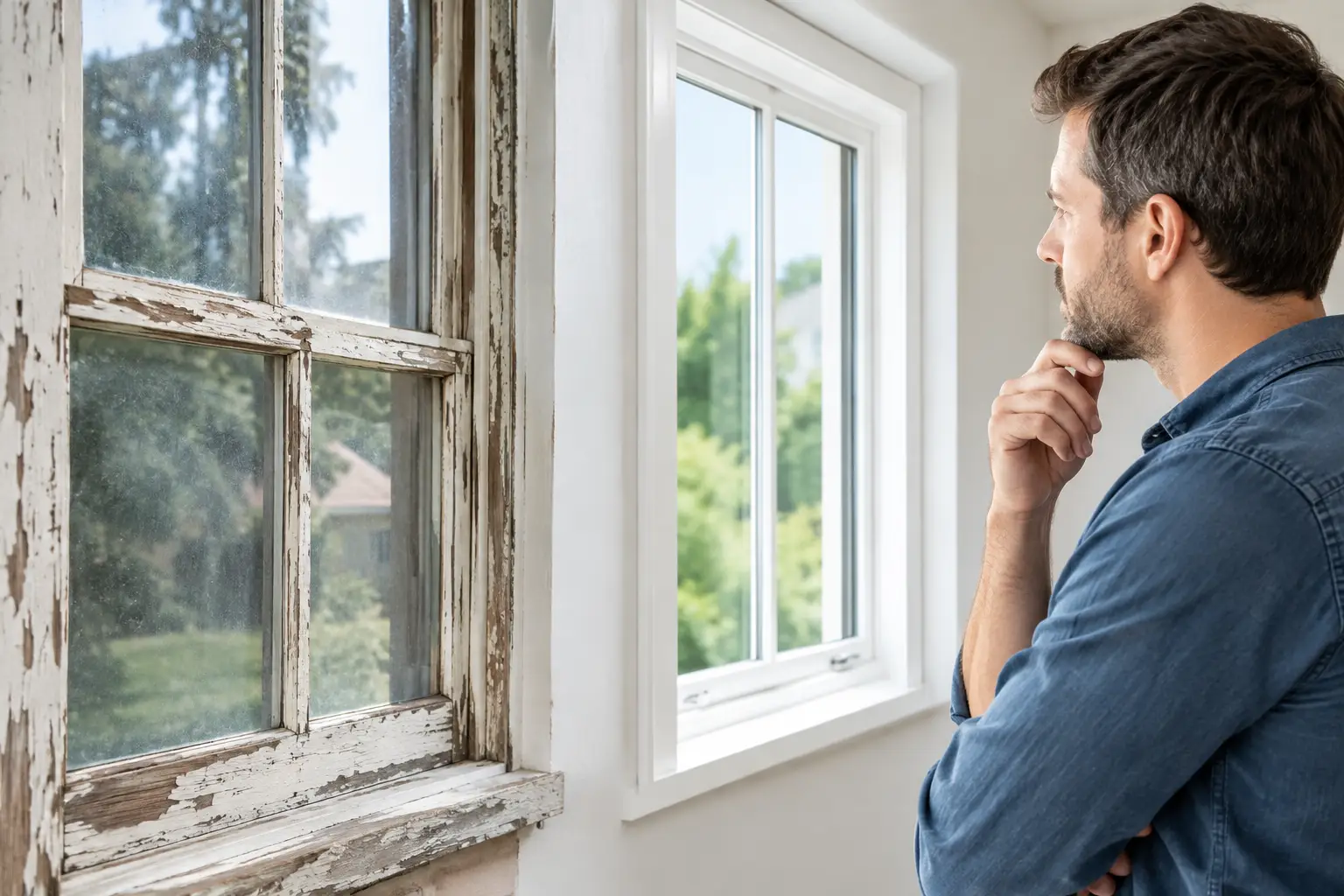
A historic window that sticks, rattles, or lets in a cold draft can make replacement sound like the obvious answer. But when deciding whether to restore or replace old windows, the visible problem is rarely the whole story. In a pre-1940 home, original wood sash windows are part of the architecture, not disposable components. With the right repairs and weather protection, many can perform far better than their current condition suggests.
Full window replacement is not your only option. The right decision begins with an honest look at the wood, the glass, the surrounding opening, and the home’s preservation requirements.
Why original windows deserve a closer look
Old windows earned a poor reputation because many have been neglected for decades. Paint bridges sash to frames. Failed putty allows water behind the glass. Worn cords leave windows inoperable. A missing or damaged storm window exposes the sash to weather it was never meant to handle alone.
Those are maintenance failures, not proof that an original window has reached the end of its life. Historic windows were designed to be repaired. Their parts are accessible, their wood is often dense old-growth lumber, and individual problems can be corrected without discarding the entire assembly.
A replacement unit takes away more than a draft. It can change the depth of the window opening, flatten the exterior appearance, reduce visible glass, and erase details that give a historic home its character. On a bungalow, Tudor Revival, Colonial Revival, or early Craftsman home, those changes are noticeable from the street and from inside the room.
For homes in Dallas Conservation and Historic Districts, replacement may also raise approval questions. A window that looks close enough in a showroom may not meet the expectations for a protected historic façade. Restoration keeps the original material in place while addressing the issues that make the windows difficult to live with.
Restore or replace old windows: assess the actual damage
The decision should not be based on age alone. A 100-year-old window can be a strong candidate for restoration, while a newer replacement window with failed insulated glass may have limited repair options. Start with the condition of the sash, frame, sill, glazing, and hardware.
Signs restoration is usually the better path
Surface deterioration is common and highly repairable. Peeling paint, cracked or missing glazing putty, loose panes, drafts around the sash, broken sash cords, worn pulleys, and sticking operation can generally be corrected through a proper restoration process.
Localized rot also does not automatically require replacement. Water tends to damage predictable areas, such as the lower sash rail, sill nose, or portions of exterior trim. A skilled restoration contractor can remove unsound material, rebuild damaged wood with compatible profiles, correct the water entry point, and preserve the original window around it.
Even a sash that looks rough can often be rebuilt. Full sash disassembly allows each joint, rail, muntin, and pane to be evaluated individually. Once old paint and failed putty are addressed, the sash can be repaired, reglazed, primed, painted, and returned to service with new cords or chains where needed.
When replacement may be justified
There are situations where replacement is the responsible choice. If a sash has extensive structural loss throughout its rails and stiles, if previous alterations have destroyed the original profile, or if an opening has been badly changed beyond practical repair, a new custom wood sash may be necessary.
That is different from installing a generic replacement window. In historic work, replacement should mean replicating what belongs there: correct muntin patterns, rail dimensions, glass proportions, wood species, and exterior details. A thoughtful replacement preserves the appearance and function of the original rather than forcing a modern unit into an old opening.
The key question is not, “Can this window be made to look new?” It is, “Can the original craftsmanship be retained and made dependable for the next several decades?” Often, the answer is yes.
Comfort comes from the whole window system
Homeowners are often told that single-pane glass is the primary reason their rooms are uncomfortable. Glass matters, but drafts and air leakage usually cause the more immediate problem. Loose sash, gaps at meeting rails, failed exterior seals, open weight pockets, and deteriorated trim allow conditioned air to escape.
A restored window addresses those weaknesses. Proper fitting improves sash operation and reduces unwanted air movement. Reglazing secures the glass and sheds water correctly. Repairing sills and trim stops decay from spreading. Fresh finishes protect the wood from North Texas sun, rain, and temperature swings.
Then there is the storm window. A well-built, period-correct operable storm window creates a second layer of protection without removing the original sash. It reduces air infiltration, improves interior comfort, and can soften exterior noise. It also protects restored wood windows from direct weather exposure, which extends the life of the work beneath it.
This combination matters because performance is not a single product feature. A tight, restored wood window paired with a properly fitted storm window can be a practical, durable answer for a historic home. It preserves the window you own while solving the reasons you considered replacement in the first place.
Look beyond the sash before making the call
Windows are connected to the wall around them. If the sill is soft, paint is repeatedly failing, or interior staining appears below the opening, the source may be flashing, exterior trim, roof drainage, or water driven behind the casing. Replacing the sash alone will not solve that problem.
A complete assessment should examine the window opening from the outside in. That includes the condition of the sill, brick molding or exterior trim, head flashing, surrounding siding or masonry, and the way water is directed away from the home. Correcting these details protects both the restoration investment and the structure behind it.
Screens deserve consideration as well. Missing or poorly fitting screens often lead homeowners to choose a replacement unit simply for convenience. Custom wood mosquito screens and interior screens can provide everyday function while keeping sightlines and exterior details appropriate to the home.
If your house includes leaded, beveled, or stained glass, the case for preservation is even stronger. These pieces are architectural features that cannot be replaced with an off-the-shelf window. Specialized restoration can stabilize the panels, repair damaged came or glass, and return them to their proper setting.
Cost is more than the initial quote
Replacement proposals can appear straightforward because they offer one visible number and a quick promise. Yet the initial price does not show every long-term trade-off. Many replacement windows have limited service lives, proprietary parts, insulated glass seals that can fail, and designs that cannot be repaired in the same straightforward way as traditional wood sash.
Restoration is custom work, and the scope varies with each home. A window needing reglazing and weather protection requires less than a window with sill repair, sash rebuilding, trim work, and a new storm window. That specificity is a strength. You pay for the condition of your windows, not for a blanket solution that treats every opening the same.
Historic value also belongs in the calculation. Original windows support the authenticity of the home, which matters to owners, buyers, neighbors, and preservation authorities. Once original sash are removed, that material and workmanship are gone for good.
Choose a specialist who respects the house
The best first step is a hands-on assessment by someone who understands historic wood windows. Ask whether the contractor will repair original sash before recommending replacement, how they address rot and water management, and whether their proposed storm windows and screens are custom-made for historic openings.
You should also ask about finishes and glazing. Traditional linseed putty glazing, careful paint preparation, and durable finish coats are not decorative extras. They are part of the system that keeps wood sound and glass secure. Details such as matching muntin profiles, preserving wavy glass where possible, and making sash operate correctly separate preservation work from a cosmetic paint job.
Ross Revival approaches each project as a repairable piece of the home, not a sales opportunity for a new unit. That means looking for the cause of the problem, preserving what can be saved, and rebuilding only what truly cannot.
Your old windows do not need to be perfect to be worth saving. They need an informed evaluation, sound craftsmanship, and protection from the elements. Before you remove the original windows that define your home, find out what careful restoration can give back: smoother operation, less draft, better comfort, and the character that made you choose the house in the first place.