
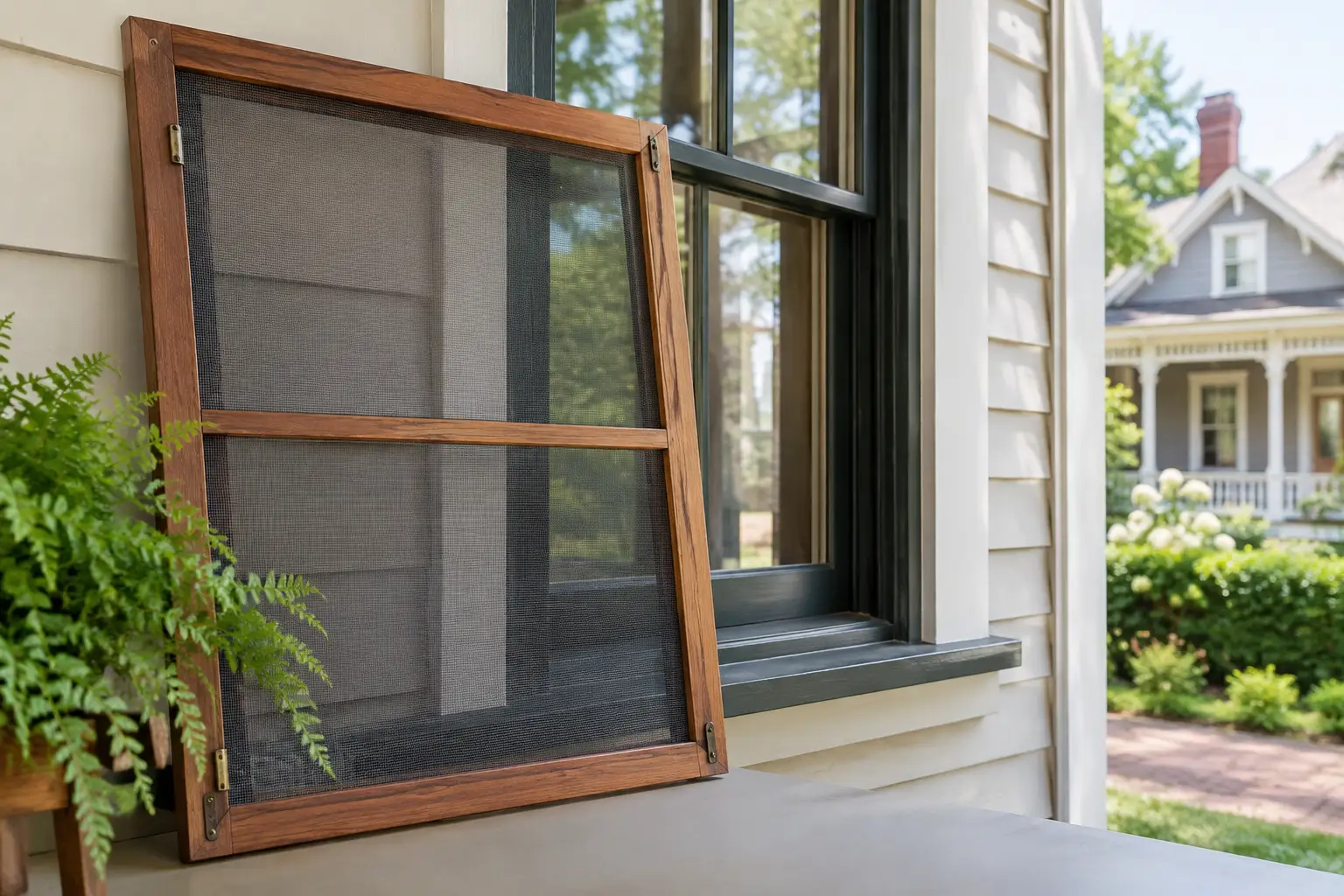
Custom Wood Window Screens for Historic Homes
A historic wood window was built to open. That simple fact is often lost when damaged screens, painted-shut sash, and modern replacement proposals enter the picture. Custom wood window screens restore a practical part of daily life in an older home: fresh air without mosquitoes, flies, or a mismatched aluminum frame distracting from the architecture.
For homes built from 1870 through 1940, a screen should never look like an afterthought. Its frame, proportions, mesh, hardware, and method of installation all affect the appearance and function of the original window. Done correctly, a wood screen belongs to the opening. Done poorly, it can conceal the craftsmanship homeowners are trying to protect.
Why Historic Windows Need Custom-Fit Screens
Older windows were not manufactured to the uniform dimensions common today. Sashes may be slightly out of square after a century of settling. Brick openings vary. Trim profiles differ from room to room. Even two windows that appear identical can have meaningful differences in width, height, or stop placement.
That is why stock screens so often rattle, bow, leave gaps, or require crude fasteners. A custom screen is measured for the actual opening, not an assumed standard size. It can sit securely, remain removable for cleaning and maintenance, and avoid placing unnecessary stress on original sash, casing, or exterior trim.
The visual difference matters just as much. Historic windows tend to have narrow muntins, carefully proportioned rails, and distinctive meeting-rail details. An oversized screen frame can make a graceful double-hung window look heavy and crowded. A properly built wood screen respects the window’s sightlines instead of competing with them.
What Makes Custom Wood Window Screens Period-Correct
Period-correct does not mean decorative for decoration’s sake. It means the screen is designed around the home’s original construction and architectural character. On a Craftsman bungalow in East Dallas, that may call for a straightforward wood frame with clean, square lines. A Colonial Revival home may require more refined proportions or a screen layout that aligns with divided-light sash.
The frame should be fabricated from durable wood, joined carefully, and finished for exterior exposure. The profile should be slim enough to preserve the visible glass area while still strong enough to hold the screen material taut. Corners, rails, and stiles need to withstand repeated removal, seasonal movement, and North Texas weather.
Screen mesh also deserves consideration. Standard insect screen is often the practical choice, but the right mesh depends on the opening and the homeowner’s priorities. Finer mesh can help with smaller insects, though it can reduce airflow and darken the view slightly. More open mesh preserves ventilation and visibility but may not keep out every tiny pest. There is no single best choice for every porch, bedroom, or kitchen window.
Finish is another decision with long-term consequences. A screen may be painted to complement the window sash or trim, helping it visually recede into the elevation. The paint system must be appropriate for exterior wood and should cover all exposed faces and edges, not only the front. Unfinished end grain and neglected lower rails are where moisture damage often begins.
The Right Fit Includes the Right Attachment
A screen can be beautifully made and still fail if it is attached carelessly. Historic sash and trim should not be peppered with new holes simply because a generic screen needs a quick place to land. The attachment method should suit the window type, the screen location, and how frequently the homeowner will remove it.
Some screens are designed to fit within a specific exterior recess. Others use discreet turn buttons or period-appropriate hardware. In certain locations, especially where original details are fragile or a screen must be removed often, the installation approach requires extra planning. The goal is secure retention without compromising original material.
This is particularly relevant in Dallas Conservation and Historic Districts, where highly visible alterations can draw scrutiny. Screens are a modest feature, but they still contribute to the street-facing character of a home. A custom, appropriately finished wood screen is far easier to justify than a bright aluminum frame that changes the appearance of every window.
Screens Work Best After the Window Is Made Functional
A screen cannot solve a window that is swollen, rotted, missing glazing, or painted shut. It only covers the problem. Before adding screens, the window itself should be able to open, close, lock, and drain as intended.
That may involve repairing deteriorated sill sections, restoring sash cords or chains, rebuilding damaged rails, replacing loose panes, or reglazing with traditional putty. Once the sash operates smoothly, a properly fitted screen lets the homeowner use the window again instead of treating it as a fixed piece of glass.
This sequence also protects the new screen. Forcing a reluctant sash against a screen, removing it repeatedly to access a failed lock, or trying to clean deteriorating glazing through mesh creates needless wear. Restoration addresses the cause. The screen supports the renewed function.
For many homes, operable storm windows are part of the larger plan. Storms can improve comfort, reduce drafts, and help manage exterior noise while allowing the original sash to remain in place. Screens and storms must be planned together so they do not conflict in the same opening or require awkward seasonal handling. Depending on the window configuration, homeowners may use separate removable screens and storms, or a purpose-built system designed around both needs.
Where Wood Screens Make the Biggest Difference
Bedrooms, kitchens, and shaded living areas are usually the first places homeowners notice the benefit. A usable window changes how a room feels on mild spring and fall days. Rather than running the air conditioner simply because insects make an open window impractical, the home can take advantage of natural ventilation when outdoor conditions allow.
Porches and sleeping porches deserve special attention. These spaces were often designed around airflow, and poorly fitted screens can undermine their purpose. Custom fabrication makes it possible to address unusual openings, large spans, and details that stock products cannot accommodate.
Street-facing windows are another priority. Their screens are seen from the sidewalk, which means proportion and color matter more. Rear elevations may allow more flexibility, but a consistent approach across the house generally produces the best result.
What to Look for Before Approving a Screen Project
A quality screen project begins with measuring each opening individually and examining the condition of the surrounding window. Homeowners should expect the craftsman to consider more than width and height. The following details determine whether the finished screen will perform well and look right:
- The window’s actual opening, including variations caused by age, settling, and prior repairs.
- The frame profile and rail width needed to preserve original sightlines.
- A durable exterior finish that protects edges, joints, and end grain.
- A removable attachment method that does not damage original sash or trim.
- Mesh selection based on airflow, insect protection, visibility, and the room’s use.
Avoid accepting a one-size-fits-all answer to these questions. A screen for a first-floor kitchen window is not necessarily right for a second-floor bedroom, a porch opening, or a prominent front elevation.
Care That Keeps Wood Screens Looking Right
Wood screens are serviceable parts of a historic house, not disposable accessories. Inspect them each season for loose mesh, worn paint, damaged corners, and debris caught along the lower rail. Clean the mesh gently with a soft brush or low-pressure rinse. Aggressive pressure washing can stretch the mesh, drive water into joints, and strip paint from the frame.
When repainting becomes necessary, address small failures early. Scrape loose paint, allow the wood to dry, prime bare areas, and apply a compatible exterior finish. If a screen no longer fits correctly, do not force it. A changing fit can signal wood movement, a shifted stop, or a window issue that deserves attention.
Ross Revival approaches screens as part of a complete preservation strategy, not a cosmetic add-on. The best result is a screen that lets an original window do what it was designed to do: bring light and fresh air into the house while preserving the craftsmanship that made the home worth saving in the first place.
A well-made wood screen may be a small detail, but historic homes are defined by small details. Give each opening the care it deserves, and the whole house benefits every time the windows are opened.