Storm Windows for Historic Homes That Work
A historic wood window can be beautifully restored and still feel drafty if it has no second line of defense. Properly fitted storm windows create that defense without asking you to discard the wavy glass, old-growth lumber, joinery, and proportions that give your home its character. For homes built between 1870 and 1940, they are often the practical answer to a question replacement-window companies tend to avoid: How do you improve comfort while keeping the original windows?
Why Storm Windows Belong on Historic Homes
Original wood sash was designed to be repaired. Its parts can be reglazed, weatherstripped, repainted, and adjusted as the house settles. But even a carefully restored single-pane window has limits. Glass transfers heat readily, and the small gaps around sash rails and meeting rails can allow air movement that makes a room feel colder in winter and hotter in a North Texas summer.
A storm window adds another layer of glazing and creates a still-air space between the two panels. That space helps slow heat transfer. A well-fitted unit also reduces wind pressure against the primary sash, which can lessen noticeable drafts when the window itself has been restored and properly weatherstripped.
The improvement is not only about utility bills. Rooms near busy streets can be calmer, especially when exterior storms are paired with sound wood sash and tight weatherstripping. Bedrooms, studies, and front rooms often become more usable when the glass no longer rattles and the perimeter leaks are addressed.
Full window replacement is not your only option. In many historic homes, it is the option that removes repairable material and changes the exterior appearance most dramatically.
Storm Windows Work Best After Restoration
Storm windows are not a substitute for failed sash. They cannot correct rotted bottom rails, loose muntins, missing glazing putty, broken cords, or a frame that has been painted shut for decades. Covering those problems may hide them temporarily, but moisture and movement will continue to do their work behind the storm.
The right order begins with the original window. A proper restoration may include removing the sash, repairing damaged wood with compatible material, resetting glass, reglazing with linseed-oil putty, repairing the pulley system, and applying a durable painted finish. Weatherstripping the meeting rails and jambs is equally important. Once the primary window operates correctly, a custom storm can perform as intended.
This approach protects the home on both sides. The restored sash remains serviceable, and the storm window takes on much of the weather exposure. Future maintenance is straightforward because every part remains accessible and repairable.
Exterior Storm Windows Preserve the Facade
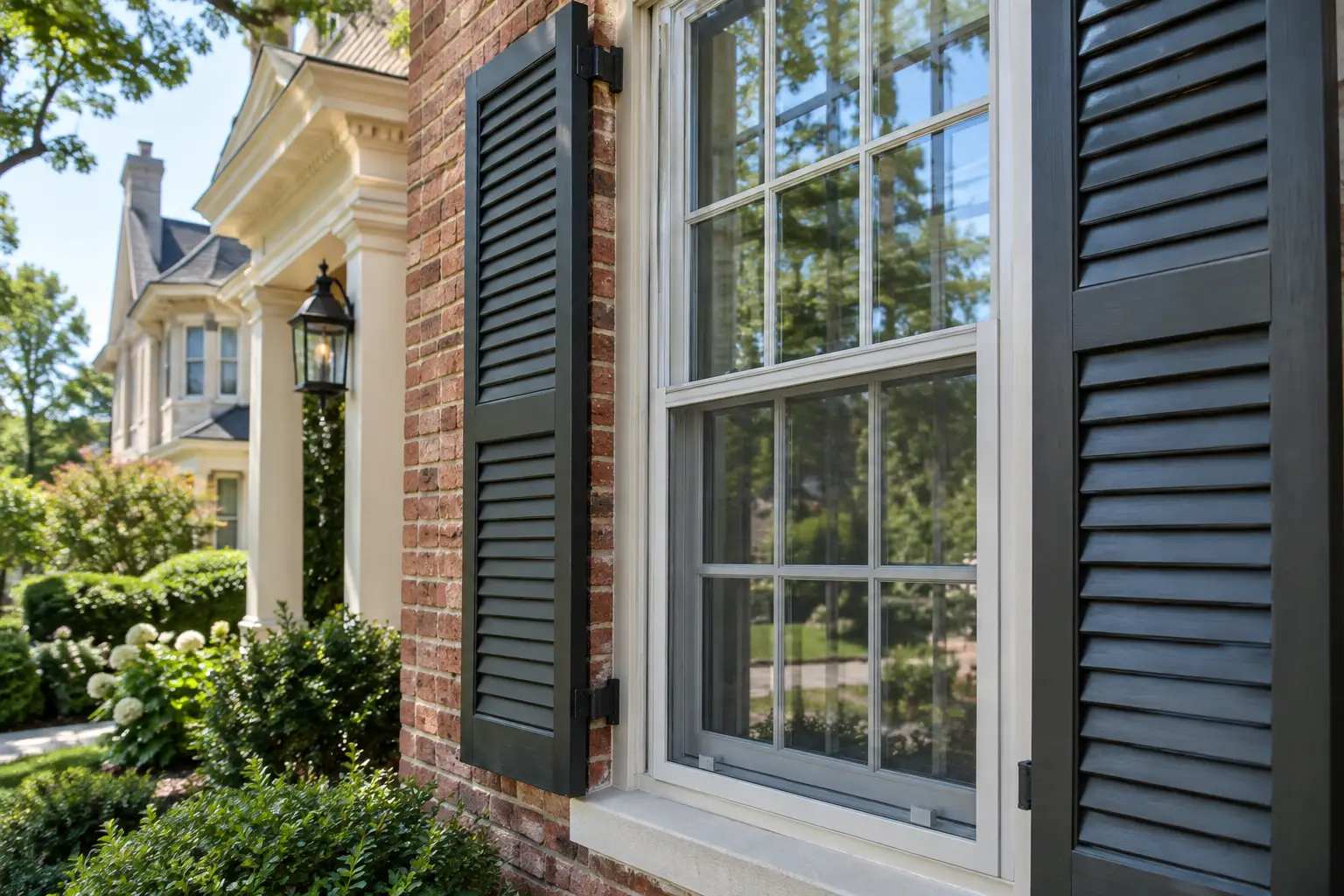
For many period homes, exterior storm windows are the most natural choice. They sit on the outside of the opening, allowing the historic interior trim, sash profiles, and glass to remain visible from indoors. From the street, a well-designed storm should follow the opening cleanly rather than look like a generic add-on.
Period-correct details matter. The meeting rail of a storm should align thoughtfully with the meeting rail of the existing sash. Frame widths, sightlines, muntin patterns, hardware, and finish color should respect the house rather than compete with it. On a Craftsman bungalow, a Colonial Revival home, or a turn-of-the-century cottage, those small decisions are visible.
Operable exterior storms are especially valuable. They allow the homeowner to open the lower section for ventilation while keeping the unit in place. This avoids the awkward seasonal routine of carrying loose panels to storage, and it makes the window more useful throughout the year.
Fixed storms may have a place on upper-story, decorative, or otherwise inaccessible openings. Still, fixed units are not automatically the best choice. If the original window is meant to open, an operable storm preserves that function and makes maintenance less complicated.
Screens Should Be Part of the Plan
A window that performs well in January but cannot welcome fresh air in April is only partly restored. Custom mosquito screens can be fabricated to suit the opening and the home’s architecture. Depending on the configuration, screens may be incorporated into an operable storm assembly or built as separate, removable units.
The goal is simple: retain ventilation without introducing oversized aluminum frames, dark screen panels, or off-the-shelf proportions that distract from the facade. Historic homes were built for cross-breezes. Their windows should still be able to provide them.
Interior Storms Have Their Place
Interior storm panels can be a sensible option where exterior changes are restricted, where a window has stained glass, or where access from outdoors is difficult. They are installed from inside the home and can improve comfort without altering the exterior view of the building.
There are trade-offs. Interior storms are usually removed for window access and may not be ideal for every operable sash. They can also create condensation concerns if warm indoor air reaches the cold primary glass. Careful fitting and an understanding of how the window and wall manage moisture are necessary.
For decorative leaded or stained-glass windows, interior protection may be particularly useful. It shields fragile historic glass from interior bumps while adding a layer of thermal and acoustic performance. The right solution depends on the window’s condition, location, and role in the architecture.
The Details That Separate a Good Storm From a Problem
A storm window should never trap water against the original frame. Exterior units need appropriate drainage and spacing so rain can escape and the assembly can dry. Wood moves with changing humidity, paint needs maintenance, and North Texas storms can drive water into places a mild climate never would. Those facts should guide the design.
Materials matter as well. Aluminum storm systems are common and can be effective, but their sharp profiles and factory finishes are often a poor visual match for a pre-1940 wood window. Custom wood storms can better reflect historic proportions and can be painted to integrate with the existing trim. They do require periodic paint maintenance, just as the original sash does.
Glass selection deserves the same care. Clear glass generally maintains the most authentic appearance. Low-emissivity coatings can improve thermal performance, but the coating, reflectivity, and color should be evaluated in context. A product that looks acceptable on a new house may produce an obvious sheen beside antique wavy glass.
Hardware is not a minor detail. Latches, stays, hinges, and screen fittings should be durable, reachable, and appropriate to the way the storm will be used. A beautifully made unit that is difficult to open will eventually be left shut or neglected.
Historic District Review Is Part of the Work
In Dallas Conservation and Historic Districts, exterior window changes may require review before work begins. Storm windows are often more compatible with preservation standards than replacement windows, but approval can depend on the proposed materials, profiles, color, visibility, and how the unit relates to the original opening.
That is why a site-specific assessment matters. A storm design that works well on a rear elevation may not be appropriate for a highly visible front facade. Homes in Highland Park, Oak Cliff, East Dallas, McKinney, and other historic neighborhoods each bring their own architectural details and local requirements.
Ross Revival approaches this work as preservation work first. The purpose is not to make an old home look newer. It is to keep its original craftsmanship in service while addressing drafts, heat, noise, and the daily frustrations of failing windows.
When Storm Windows Are Worth the Investment
Storm windows make the most sense when the original sash has architectural value and can be restored. They are particularly effective for homes with intact divided-light windows, original wavy glass, uncommon sash profiles, stained glass, or windows that define the facade. In those cases, the cost is not simply buying an extra layer of glass. It is an investment in retaining material that cannot be duplicated by a standard replacement unit.
They may be less urgent where a window is already protected by a deep porch, where a room is rarely used, or where the sash requires major structural repair before any storm can be considered. Priorities should follow condition and exposure, not a one-size-fits-all sales pitch.
A good storm window should be nearly invisible in the best sense of the word. It should make the room quieter, the sash more comfortable to sit beside, and the home easier to live in – while leaving the craftsmanship that brought you to the house clearly in view.