McKinney Conservation & Historic District Window Restoration
A window that sticks, rattles, or lets in cold air is frustrating. On a historic McKinney home, it is not proof that the window has reached the end of its life. Conservation & Historic District of McKinney window restoration gives original wood sash the careful repair they were built to receive, preserving the profile, glass, joinery, and character that replacement windows cannot duplicate.
For homes built before 1940, original windows are part of the architecture, not an interchangeable component. Their narrow muntins, wavy glass, divided-light patterns, and substantial wood frames contribute to the proportions of the entire facade. The right restoration approach keeps that craftsmanship in place while correcting the problems homeowners feel every day: drafts, noise, peeling paint, failed glazing, water intrusion, and windows that will not open.
Why replacement is rarely the first answer
Replacement-window companies often frame old wood windows as inefficient by definition. That claim skips over the condition of the window and the difference between an original, repairable sash and a neglected one. Most historic wood windows were made from dense, old-growth lumber. When damaged areas are repaired correctly and the sash is reglazed, weathered, and protected, that wood can continue serving the home for decades.
A full replacement can also change a historic home in ways that are difficult to reverse. Modern units commonly have thicker frames, wider muntins, different screen profiles, and reflective insulated glass that does not match the original appearance. Even a replacement marketed as traditional can alter the visible glass area and flatten the details that give an older home its character.
That does not mean every historic window can be saved without question. Severe structural damage, extensive rot left unaddressed for years, or prior alterations may call for rebuilding parts of a sash or frame. The point is that replacement should follow a real assessment, not a sales script. Full window replacement is not your only option.
What McKinney historic district window restoration involves
A proper restoration begins by finding the source of the failure. Paint can seal a sash shut. Loose or missing glazing can admit water and air. Failed sash cords, worn pulleys, and broken weights can make an otherwise sound window hard to operate. A deteriorated sill may be the result of missing flashing, an exterior drainage issue, or a neglected paint system rather than a reason to remove the entire unit.
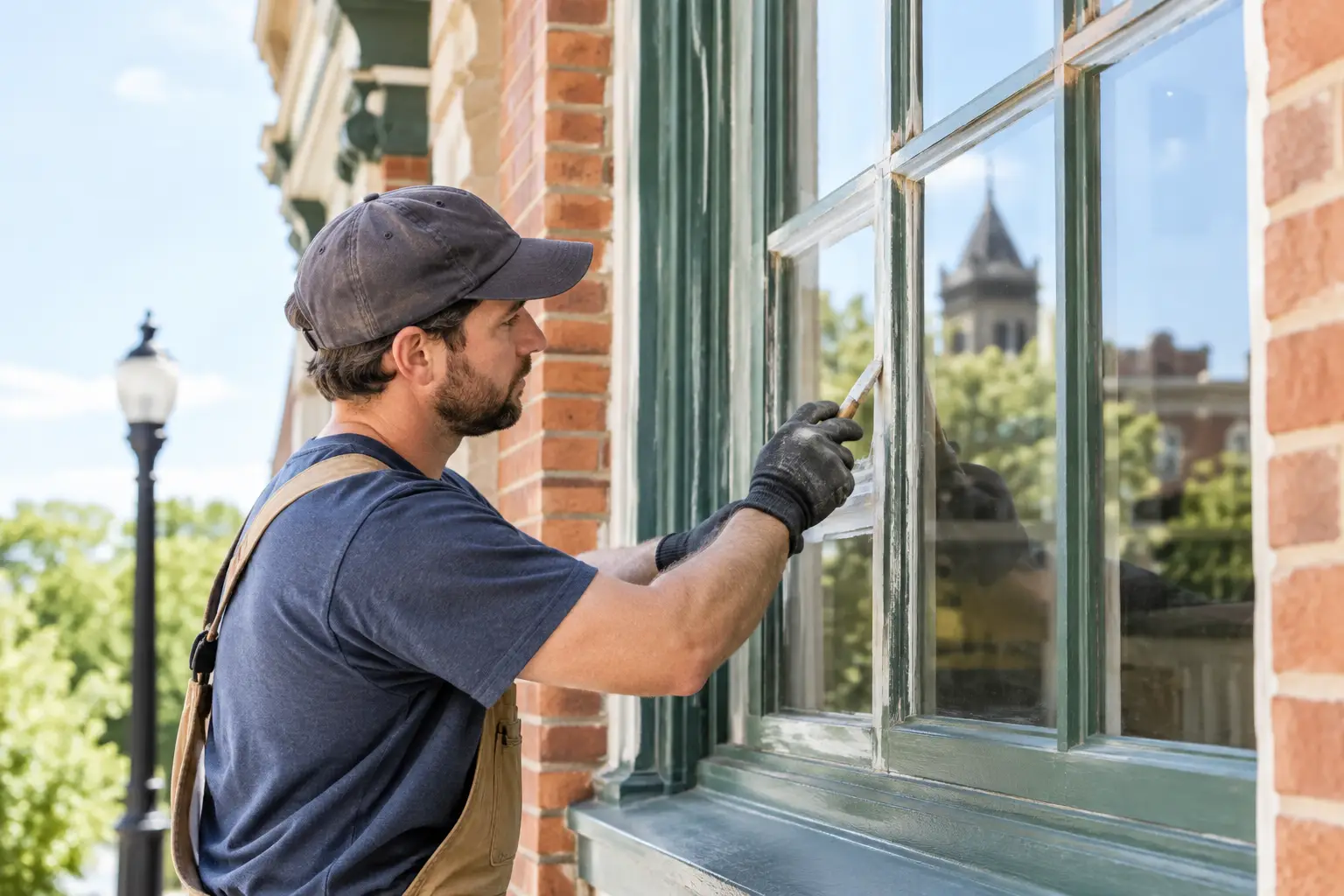
The work should address the whole assembly. Sashes are carefully removed as needed, stripped of failing coatings, repaired, and reglazed with appropriate materials. Loose joints are stabilized. Damaged wood is repaired or rebuilt to match the original profile. After preparation, a durable paint system protects the exterior from the weather while allowing the home to retain its historic appearance.
Period details matter. A craftsman should match muntin dimensions, rail and stile profiles, meeting-rail details, and existing trim instead of using a one-size-fits-all substitute. If a sill, casing, or brick mold has deteriorated, the repair should blend into the original work rather than announce itself from the sidewalk.
Reglazing is protection, not a cosmetic touch-up
Glazing compound is the weather seal between glass and wood. When it cracks, separates, or falls away, rain can work behind the glass and into the sash. Left alone, that moisture can cause paint failure and rot.
Careful reglazing removes failed putty, prepares the wood, sets and secures the glass, and applies a new glazing bead. Traditional linseed-oil glazing putty remains a sound choice for many historic applications because it is compatible with old wood and can be maintained over time. The finish coats must be applied correctly to protect both the sash and the glazing line.
Operation should be restored, not ignored
A painted-shut window is not just inconvenient. It limits ventilation, can affect emergency egress, and encourages homeowners to stop using a valuable part of the house. Restoring operation may include freeing the sash, correcting swelling or binding, repairing cords, servicing pulleys, and balancing the weight system.
Not every historic window needs to glide like a new vinyl unit. It should, however, open and close safely and predictably for normal use. The goal is honest performance from the original window, not a superficial fix that lasts one season.
Comfort comes from the complete system
Historic windows are often blamed for drafts that actually enter around the sash, through failed glazing, or at gaps between the frame and surrounding trim. Restoration addresses these weak points. Weatherstripping, sound glazing, repaired wood, and correctly fitted sash make a meaningful difference in comfort.
For many McKinney homes, custom operable storm windows provide the strongest performance upgrade without sacrificing the original sash. A well-made storm window creates an insulating air space, reduces air movement, helps soften exterior noise, and protects restored primary windows from weather. Because it can be designed around the home, it does not have to look like an afterthought.
Exterior storms are particularly useful when homeowners want improved weather protection and noise control. Interior storms can be a practical option where exterior changes are limited or the facade must remain visually untouched. Screens can also be fabricated to fit historic openings and profiles, giving homeowners fresh-air ventilation without generic aluminum frames disrupting the elevation.
There is a trade-off. Storm windows add cost and require thoughtful design, operation, and maintenance. But for an original window with good bones, restoration plus a properly fitted storm system often offers a better balance of comfort, preservation, and long-term value than removing the historic window altogether.
Work with the district, not against it
Homes in conservation areas and historic districts may be subject to review requirements for visible exterior changes. Window replacement, altered muntin patterns, new cladding, and changes to screens or storm windows can receive close attention because windows strongly shape a building’s historic character.
Requirements vary by property, visibility from the public right-of-way, and the specific district guidelines in effect. Homeowners should not assume that an approved product in one neighborhood will be appropriate for another. Before work begins, confirm whether the project requires a certificate, staff review, or other approval.
Restoration is often the preservation-friendly path because it retains the original materials and appearance. Still, documentation matters. Clear photographs of existing conditions, measurements, and a description of proposed repairs can help explain that the work is preserving historic fabric rather than changing it. When storms, screens, trim repairs, or rebuilt components are involved, details such as frame profile, finish color, and visibility deserve careful attention.
Signs your original windows need professional attention
Do not wait for a sash to fail completely. Early repairs are usually more straightforward and preserve more original material. Watch for recurring peeling paint, soft wood at lower rails or sills, cracked or missing glazing, fogging from interior condensation, loose glass, water stains, sticking sash, or visible gaps when the window is closed.
Some signs point beyond the sash itself. Water damage beneath a window may indicate a flashing or trim problem. A room that stays uncomfortable after basic weatherstripping may need a closer look at the frame, surrounding wall opening, or storm-window fit. Good restoration work follows the evidence instead of covering symptoms with caulk and paint.
Ross Revival approaches these projects as preservation work with practical results. That means assessing the sash, frame, trim, glazing, drainage, and performance needs together, then recommending repairs that fit the house rather than forcing the house to fit a modern product.
Preserve the view, improve the living
Historic windows ask for maintenance, but so does every exterior part of a historic home. The advantage is that wood sash can be repaired, reglazed, repainted, and kept in service. That repairability is a strength, especially when the work respects the original construction.
Before approving replacement, have the existing windows evaluated one opening at a time. A careful assessment can show which pieces need routine restoration, which require more substantial rebuilding, and where storms or screens can improve daily comfort. Preserve the craftsmanship. Eliminate the drafts. Your McKinney home can keep the windows that make it recognizable while becoming a more comfortable place to live.