When Window Restoration Experts Are Worth It
A painted-shut sash, loose glass, and a winter draft can make an original window feel like a liability. But for a home built before 1940, replacement is rarely the only answer. Window restoration experts assess what is actually failing – often glazing, weatherstripping, cords, hardware, or isolated wood rot – and repair the window as a working historic assembly rather than treating it as disposable.
That distinction matters in Dallas-area historic neighborhoods, where original wood windows are part of the architecture, not an interchangeable component. A proper restoration preserves the proportions, profiles, wavy glass, divided-light patterns, and material quality that modern replacement units often cannot match. It can also solve the everyday problems homeowners feel most: drafts, difficult operation, moisture intrusion, street noise, and rooms that never seem to hold a steady temperature.
Original Windows Deserve a Real Diagnosis
A deteriorated window can look beyond saving from the sidewalk. Peeling paint, cracked putty, and darkened wood are visible warnings, but they do not automatically mean the entire unit has failed. Old-growth wood used in many homes from 1870 through 1940 is dense, stable, and worth retaining when repaired correctly.
The question is not whether a window is old. The question is where the damage is, how far it extends, and whether the sash, frame, sill, and surrounding trim can still do their jobs after targeted repair. In many cases, they can.
A restoration-minded assessment looks at the whole opening. It identifies loose or missing glazing, failed paint layers, broken sash cords, damaged parting beads, gaps around the sash, worn pulleys, deteriorated sill corners, and improper past repairs. It also considers water management. A beautifully repaired sash will not stay sound if failed flashing, open joints, or a damaged sill continue directing water into the wall.
This approach gives homeowners a more useful answer than, “You need new windows.” Full replacement may be necessary when there is extensive structural failure, severe distortion, or damage that cannot be responsibly rebuilt. But it should be the conclusion of a careful inspection, not the opening sales pitch.
What Window Restoration Experts Actually Repair
Historic window restoration is more than applying fresh paint and caulk. It is detailed work that returns each component to service while respecting the window’s original design.
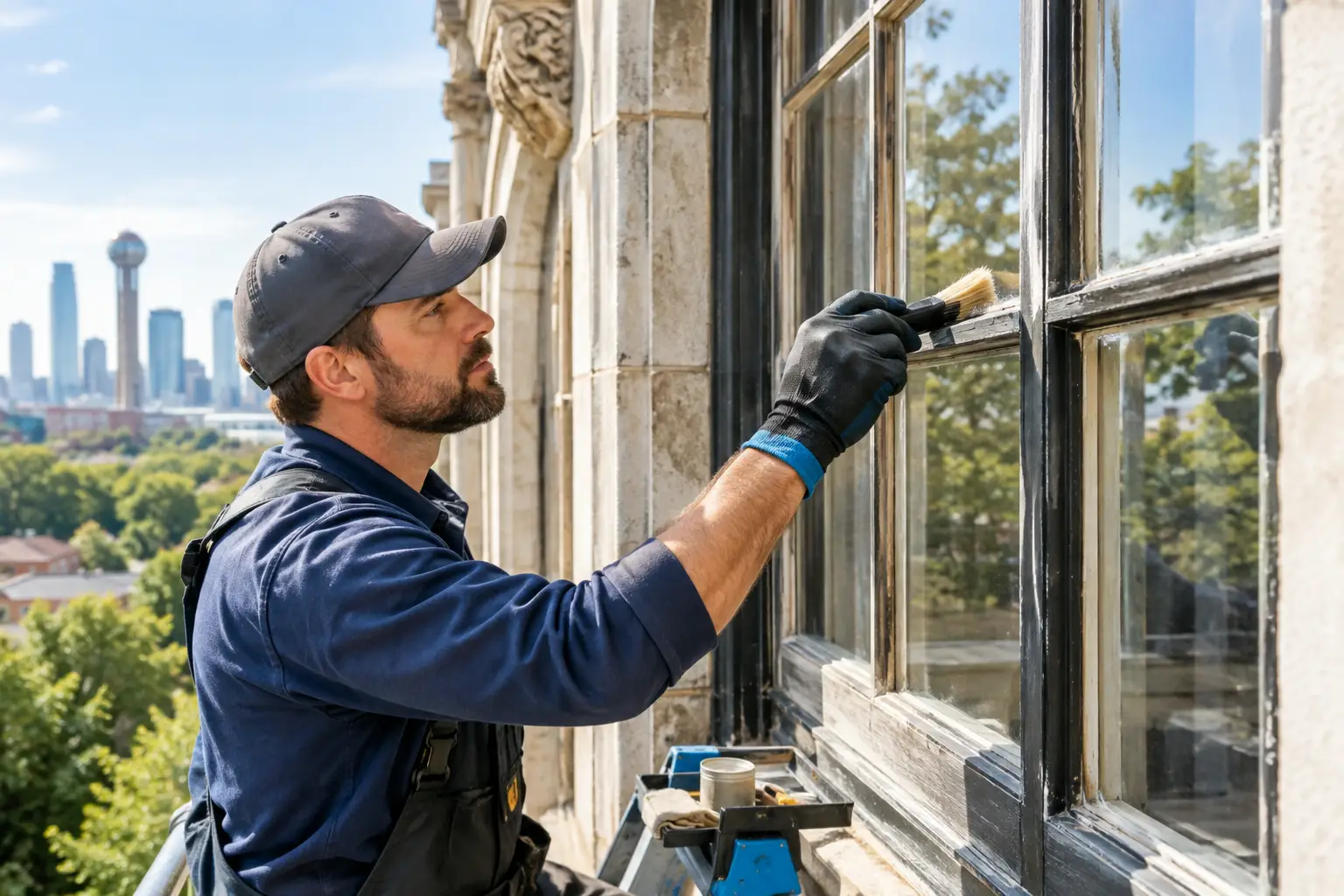
A complete sash restoration typically begins with careful removal and disassembly. Layers of failing paint are addressed, damaged wood is repaired or rebuilt with compatible material, and weakened joints are stabilized. Broken panes can be replaced, while salvageable historic glass is retained whenever possible. The sash is then reglazed with traditional linseed putty, primed, and finished with durable coatings designed to protect the wood from North Texas heat, sun, and seasonal moisture.
Operation matters as much as appearance. Sash cords, chains, weights, pulleys, stops, and parting beads may be repaired or replaced so windows open, close, and stay where they are put. Proper fitting reduces rattles and air gaps without forcing the sash into an overly tight fit that traps moisture or damages painted surfaces.
The work may extend beyond the sash itself. A skilled restoration contractor can repair wood trim and sills, add over-window flashing where appropriate, restore stained glass, and fabricate period-correct screens. Each detail protects the larger investment. Neglecting a failed sill while refinishing the sash is not preservation. It is postponing the repair.
Storm Windows Change the Performance Equation
The honest criticism of single-pane historic windows is that glass alone does not provide the insulation level of a modern insulated-glass unit. That is true. It is also not the whole story.
A well-restored wood window paired with a properly fitted operable storm window creates a controlled air space that substantially improves comfort and reduces drafts. Storm windows can also lessen exterior noise and help protect the restored sash from wind-driven rain and ultraviolet exposure. For many historic homes, this combination delivers meaningful performance without changing the exterior character or sacrificing original windows.
Custom fabrication is especially valuable when standard storm panels would look out of place. Period-correct operable storm windows can be built to fit the opening, align with the home’s sightlines, and remain practical for ventilation and cleaning. The right solution depends on the window style, the home’s architecture, and any historic-district requirements.
Restoration Versus Replacement: The Trade-Offs
Replacement-window marketing often frames the decision as old versus efficient. Historic homeowners deserve a more accurate comparison.
Replacement may offer a quick path to a uniform appearance, and it can make sense for nonhistoric additions or windows that have been altered beyond reasonable repair. Yet most replacement products have a limited service life, especially when seals fail, balances wear out, or cladding and vinyl components degrade in harsh sun. Their profiles are often thicker, their glass patterns flatter, and their muntins less convincing than the original woodwork they replace.
Restoration requires skilled labor and patient work. It is not the cheapest shortcut, and it should not be treated as one. Costs vary with the number of windows, access, deterioration, glass needs, trim repairs, and whether custom storms or screens are included. But restoration keeps the original material in place, avoids unnecessary disposal, and can protect the architectural integrity that supports the value and appeal of a historic home.
For conservation and historic districts, the decision also involves compliance. Changing visible windows can require review or approval, while repairing original material is often the more straightforward preservation path. Homeowners should still verify the requirements for their specific district before work begins. A contractor familiar with City of Dallas Conservation and Historic Areas standards can help identify what documentation and design choices may be needed.
Signs It Is Time to Call a Specialist
Historic windows rarely fail all at once. They give homeowners warning signs: a sash that will not stay open, glazing that has loosened from the glass, paint that is separating from the wood, soft areas at the sill, or a noticeable draft at the meeting rails. Condensation may also point to air leakage, poor ventilation, or a missing storm window.
Do not wait for a small problem to become a large one. Water entering through failed glazing or an unprotected joint can work behind paint for years before the damage becomes obvious. Early repair usually preserves more original material and keeps the scope manageable.
It is equally wise to be cautious with quick fixes. Spray foam, heavy caulk beads, adhesive weatherstripping, and painted-over hardware can make a window harder to repair later. Historic windows need controlled drainage, correct clearances, and materials that move with the wood. A fix that stops a draft today but traps moisture tomorrow is not a durable solution.
Choosing the Right Restoration Contractor
Not every window company is equipped to restore historic wood sash. Ask direct questions about process and materials. Does the contractor repair individual sash components or default to replacement? Can they rebuild deteriorated wood rather than covering it? Do they use traditional glazing methods? Are storms, screens, trim repairs, and water-management details handled as part of the same scope?
Experience with older homes matters because the work is rarely standardized. One house may have original weight-and-pulley windows with hand-blown glass. Another may have later alterations, unusual muntin patterns, stained-glass panels, or hidden damage from decades of deferred maintenance. A specialist should be comfortable diagnosing these conditions without erasing the details that make the home distinct.
Accountability matters, too. You should know who will assess the work, who will perform it, and how the finished windows will be protected. Ross Revival approaches each project as a preservation repair with a performance goal: retain the craftsmanship, eliminate the drafts, and leave the home looking like itself.
A historic window does not need to be perfect to be valuable. It needs knowledgeable care, sound materials, and repairs that respect how it was built. When that work is done well, the result is not a window frozen in time. It is an original window ready to serve the home for decades more.